
Proving installer competence is no longer optional – it’s the foundation of trust in Fire & Security.
And it is now a legal requirement, set out in Regulation 11F of the Building Regulations 2010. This Act has changed how we think about competence. That shift has made proving installer competence more important — and more valuable — than ever. It’s no longer enough to say “We’ve got experience” or “We’ve done this before.”
Competence is now defined using the SKEB framework: Skills, Knowledge, Experience and Behaviours. And the Responsible Person now has a legal duty to show they chose competent people — not just qualified ones.
That means installers need to show – not just say – that they’re up to the job. And the businesses who make their SKEB visible are the ones who’ll stand out.
The good news? That same proving installer competence can double up as powerful marketing.
Here’s how to make your Skills, Knowledge, Experience and Behaviours (SKEB) more visible, more verifiable, and more valuable.
Compliance isn’t just about box-ticking. It’s about risk… and reassurance.
Competence isn’t just a matter of opinion anymore. It’s a legal obligation under Regulation 11F of the Building Regulations 2010. If you’re installing life-safety systems – whether that’s electronic locks, access control or any part of a fire protection strategy – you need to prove you’re doing it right.
For the Responsible Person, that means:
- Checking SKEB before appointing someone
- Documenting the decision-making process
- Being able to justify their choice if challenged
For installers, it’s a risk… or an opportunity. Because the companies who make their competence easy to verify are the ones who’ll win trust… and contracts.
If you want the full picture of what the law actually requires — Regulation 11F, Article 18 and the Article 33 due diligence defence — we cover it in our pillar piece on how to prove competence in fire safety. It maps out the four-layer evidence stack that protects both the contractor and the Responsible Person.
Vague promises don’t cut it anymore
“We’ve been doing this for 20 years” isn’t proof. Nor is “Don’t worry, we’re fully qualified.”
Responsible Persons are legally accountable for the choices they make. That means they need more than vague reassurances. They need evidence.
And yet, ask most installers what SKEB stands for and you’ll get blank looks. Ask to see recent training or proof of insurance efficacy and you’ll be waiting. Proving installer competence seems to be bottom of their list of priorities.
We’ve seen it first-hand:
- Contractors with no awareness of the Building Safety Act
- Engineers who can’t produce relevant training or certification
- Installers who think behaviour doesn’t matter… even though it’s in the framework
That’s why guidance matters. That’s why training matters. And that’s why SKEB isn’t just a compliance issue. It’s a marketing one.
Because being competent isn’t the same as proving it. But proving it is what wins trust.
When competence isn’t visible, the Responsible Person is exposed
The truth is, most Responsible Persons aren’t technical experts. They rely on the supply chain to guide them AND protect them.
But when something goes wrong, guess who the law holds responsible?
It’s the person who signed it off. The one who commissioned the work. The one who “should have known better.”
If you’re an installer, think about that next time a Responsible Person asks you for proof. They’re not doubting your ability. They’re protecting their own liability.
And if you’re a Responsible Person? Demand better. Don’t settle for vague claims. Ask to see Skills, Knowledge, Experience and Behaviour.
Guidance that helps. Not just guidance that exists.
For too long, the Fire & Security industry has muddled through with ambiguous guidance and inconsistent standards. That’s changing.
Two documents are setting a new bar in Access Control:
- BSIA Form 353 – Access Control Considerations for Fire Regulations, Fire Safety, Fire Systems and Emergency Escape Compliance: A Guide
- NSI NCP 109 – Access Control System Design
These aren’t just paperwork. They’re practical guides that show what good looks like when it comes to designing and installing compliant access control systems.
“Form 353 and NCP 109 set out correct, compliant ways of achieving Access Control without compromising Fire Safety. With these documents, BSIA and NSI are leading the way – setting the bar for the security industry to step up to.”
— Roy Buckingham, Abloy UK
Dame Judith Hackitt called for a cultural shift… from lowest-cost to right-first-time. That isn’t just rhetoric. It’s a reminder that compliance starts with competence… and competence starts with clarity.
So how can you make your SKEB easy to verify?
Responsible Persons aren’t mind readers. They need clear proof that you understand compliance — and take it seriously.
What counts as proving installer competence?
Competence can be demonstrated in many ways — but the most credible proof is external, structured and current. Training from respected industry bodies like the FIA (Fire Industry Association) and the FPA (Fire Protection Association) is highly regarded, especially where it covers standards, regulations and Fire Safety system design.
For Access Control and related areas, training from schemes like the Abloy Partner Programme or the NSI’s best-practice courses can help too — especially when you link these qualifications to verifiable online listings.
Manufacturer-led schemes like those from Paxton or Texecom can be helpful too — but only if they are part of a wider, standards-based approach and regularly refreshed.
The goal? Make your competence visible, verifiable and up to date.
- Linking training or certification certificates to your website or profiles — so RPs can verify your competence without chasing you.
- Linking third-party certifications (like BAFE or NSI) directly to your listing on those organisations’ websites — for BAFE, you’ll need your BAFE scheme number to create a verifiable link.
- Referencing specific standards (like BS 7273-4 or EN 13637 – which relate to Fire Alarm-linked door releases and electrically controlled escape doors) in your proposals to show technical competence and life-safety awareness.
- Using manufacturer partner badges that link to verifiable directories – and show your product-specific competence has been assessed.
- Showing your CPD history (like FIA/FPA training) on LinkedIn or in tenders – proving you actively maintain and update your knowledge.
- Sharing content (on your website or LinkedIn) that explains compliance in plain English – showing you understand the regs and can guide clients clearly.
- Producing your certificates promptly, without hesitation – it signals confidence in your competence and readiness for due diligence.
- Ensuring you’re insured for the categories you actually work under – and have efficacy in place if something goes wrong.
These aren’t sales tactics. They’re trust tactics. And trust wins work.
How Abloy’s Partner Programme supports SKEB
ABLOY has been providing training into the security systems and access control sector since 2006. That long-standing commitment to competence is why they were invited to contribute to both BSIA Form 353 and NSI NCP 109.
Roy Buckingham was nominated as the Abloy representative due to his credentials. He contributed directly to the BSIA guidance and supported the NSI process via a colleague — with some of his written material included in the final documents.
That involvement led to Roy speaking at the BSIA Autumn Forum at The Shard — where Jo heard him talk about competence, guidance and access control. They got chatting afterwards… and shared a long mutual rant about how hard it is to prove competence clearly.
Roy explained that ABLOY’s new Partner Programme adds a structured, verifiable framework:
- Partners must complete multiple, relevant training courses
- A formal agreement sets mutual expectations
- Training is tracked and refreshed regularly
- Verified partners may use the Abloy Partner logo (with guidelines)
- A public-facing directory is in development — helping Responsible Persons confirm a contractor’s product-specific competence
It’s not a shortcut to certification. It’s a step towards verifiable competence — showing Skills, Knowledge, Experience and Behaviour in action.
Competence is a culture. And marketing plays a part.
As Dame Judith Hackitt warned in her post-Grenfell review, the industry must move away from a culture of minimum compliance and lowest-cost thinking. Competence must be demonstrated, not assumed — and that culture shift needs to happen at every level.
Raising standards isn’t about making it harder to get into the Fire & Security industry. It’s about making it easier to do it right.
If you’re a manufacturer, support training and transparency.
If you’re a trade body, define competence and create frameworks.
If you’re a marketer, helping Fire & Security companies with proving installer competence.
At Lollipop, we’re both marketers and Responsible Persons. We’ve felt the frustration of vague claims, missing paperwork and compliance that’s more talk than action.
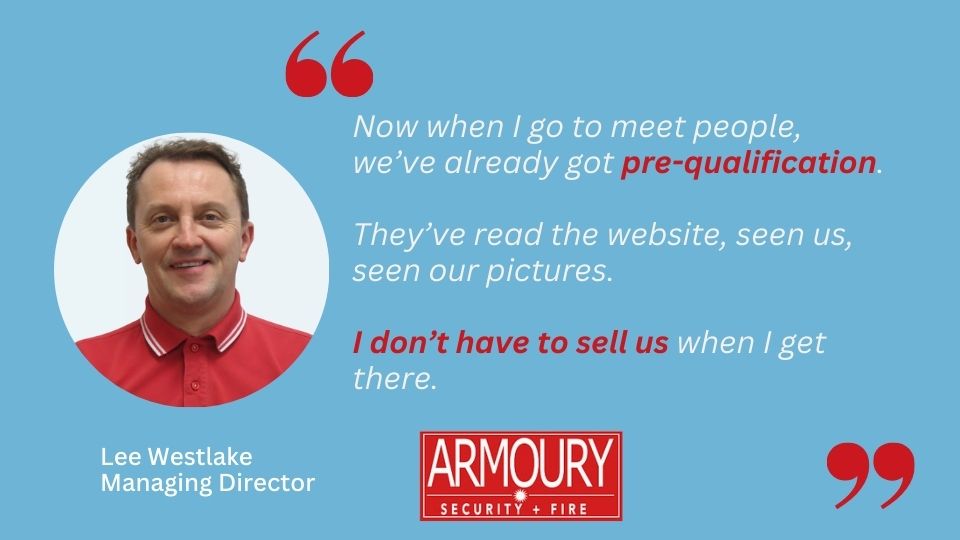
That’s why our Fire & Security marketing strategy focuses on making competence clear – so you can earn trust before you even pick up the phone.
Because the Responsible Person can’t afford guesswork. And your business can’t afford to look like a risk.
Need help turning your competence into trust? Let’s talk. Click the link below
This article references fire safety legislation applying in England and Wales for context, and competence provisions in the Building Regulations 2010, which apply in England. Different legislation applies in Scotland and Northern Ireland. It is not legal advice. For specific compliance or due diligence questions, readers should seek advice from a qualified solicitor or competent fire safety professional.