
Ask any Fire & Security business what’s holding them back and one answer comes up again and again:
“We can’t find enough engineers.”
This Fire and Security engineer shortage is creating a ripple effect across the industry – not just for hiring, but for marketing too.
“I’m worried you’ll get me more enquiries than I can handle,” says one installer.
“What’s the point of marketing if we can’t deliver on the work?” says another.
That’s the reality we’re seeing – marketing isn’t failing, it’s being paused. Growth is being delayed by a lack of engineers.
The Fire & Security engineer shortage in the Fire & Security industry isn’t just a hiring problem – it’s a marketing one too.
No Engineers, No Confidence to Grow
When businesses don’t have enough engineers, growth feels risky.
And when growth feels risky, marketing gets shelved.
That’s a real problem. Because even if you’re busy now, staying visible is what secures your future – whether that’s attracting ideal clients or future engineers.
At Lolly, we understand that struggle. That’s why we’re not just creating standout content – we’re also working to raise awareness of the very solutions that can help solve the skills crisis.
Enter Skills for Security: Building the Workforce of the Future
One of the most powerful solutions we’ve seen is Skills for Security.
Since 2009, they’ve been training the next generation of Fire & Security engineers through their flexible apprenticeship programme.
With training centres in Scotland, the North West, Midlands, North London and East London (with Dagenham opening in July), Skills for Security is highly accessible to employers across the UK.
They offer a curriculum structured around 14 training blocks, blending classroom learning with real-world site experience, they’re building a pipeline of talent the industry desperately needs.
“They come to college in blocks – five days at a time, across 14 blocks in total,” explains tutor, Richard Aldridge. “Each time, they focus on something different. We teach the theory but also get them hands-on with practical work they may not have the chance to learn on site.”
This includes everything from system installation and commissioning to paperwork and regulations. Apprentices start by shadowing, but by block 10 (usually in the second year), many are confident enough to install systems independently.
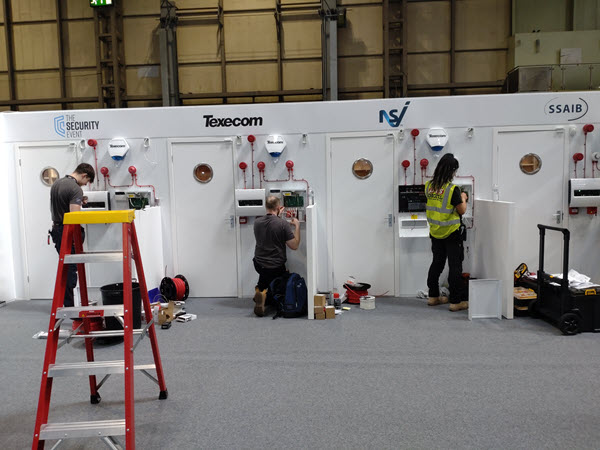
Apprentices aren’t just learning theory – they’re working with real kit too. Thanks to sponsors, Skills for Security gets access to the latest equipment from top manufacturers. So apprentices are training on the systems they’ll actually see on site. That means they’re more useful, more confident and more job-ready.
“Some of them are already good at it by the end of year one,” Richard adds. “And we prepare them with the fundamentals before they even start with us.”
We know that many business owners worry about the time it takes to train someone new. But with Skills for Security’s structured programme, apprentices can start contributing to real projects within months – not years. It’s a smart way to grow your team without overwhelming your current staff.
By investing in apprentices, Fire & Security businesses aren’t just solving a short-term staffing issue – they’re actively helping to future-proof the industry. Every trained apprentice strengthens the sector as a whole.
That means Fire & Security companies of all sizes – from small, local installers to national firms – can start seeing value from apprentices relatively early in the programme. They’re not waiting years; they’re growing their capacity steadily and sustainably.
Plus, being known as a business that trains and supports new talent helps build your reputation – not just with clients, but also with future hires. It shows you care about quality, development and doing things properly.
And it’s not just school leavers, career changers retraining for a new future/. One of their tutors, Richard Aldridge, knows exactly what it’s like to change careers—because he did it himself. After years in print finishing and installing smart meters, he retrained in Fire & Security at the age of 39. He’s now helping others take the same path he did. Proof that with the right support, it’s never too late to join the industry and start making a difference.
These are all messages that more installation companies need to hear.
That’s why Lollipop founder, Jo Shaer has been talking to Richard at Skills for Security, to explore how we can help increase visibility of their service among the installers we work with.
And here’s the win for marketing: with a reliable team in place, businesses can say yes to more work with confidence… knowing they have the capacity to deliver what they promote. That makes every lead more valuable.
Because the truth is, our clients don’t just need better Fire & Security marketing… they need a solution to the Fire & Security enegineer shortage.
Without that, growth feels risky. With it, marketing starts working again.
Don’t Put Your Marketing on Hold Because of the Fire & Security Engineer Shortage!
The Fire & Security engineer shortage is slowing business growth. It’s holding back marketing.
But together, we can turn things around.
At Lolly, we’re helping Fire & Security companies stay visible, trusted and in demand, while working alongside organisations like Skills for Security to strengthen the workforce for the long haul.
Want help building your brand while building your team? Let’s talk.