
Author: Jo
When Connected Security Makes Competence Harder to See
On handover day, connected security systems are easy to judge. The cameras cover the right areas. The cabling is tidy. The app works on the client’s phone. Everything a buyer can see looks right. The parts that decide whether it stays right are much harder to inspect. Who can get into the system remotely. How the recorder or controller sits on the client’s network. Whether firmware updates will be applied after the engineers leave. Where footage and user data are stored. What happens when a connection drops or a product reaches end of support. None of that shows up in a neat proposal. The buyer still carries it.
Who Really Makes the Fire & Security Buying Decision?
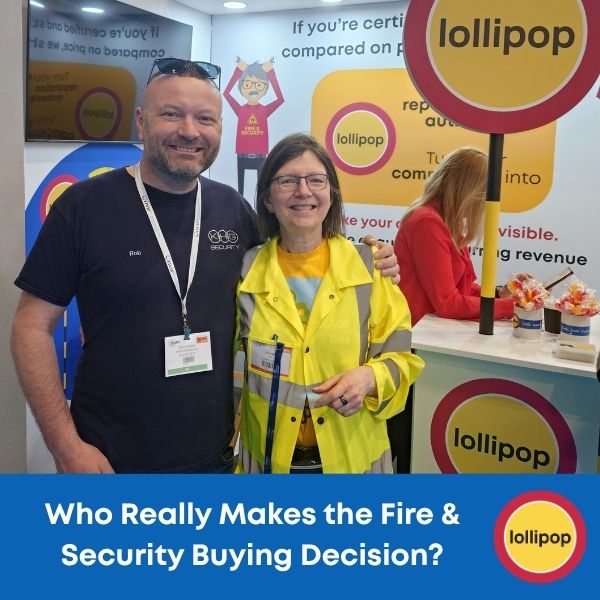
Rob Rathbone is a Director of KHG Security Limited, an SSAIB certified installer in Knutsford, Cheshire. On a Room Secured panel he explained why he sticks with particular manufacturers. His reason is risk. He knows which manufacturers actually support the kit when it fails. He knows who takes the issue seriously and who helps get it resolved. He knows who understands what it costs to send an engineer back to site. Because it’s the installer that takes the call at two in the morning. The manufacturer does not. Now put two alarm quotes side by side. The buyer assumes they are comparing similar systems. Often they are not. One installer chose the kit because it was cheap, familiar or easy to sell. The other chose it knowing how it behaves in the real world and what happens if it fails at the worst possible moment. That difference never appears in a quote. The phrase “We use quality equipment” just does not capture it. Which matters more than it should, because the person reading that quote is rarely the person who decides.
How Fire & Security Companies Turn Enquiries Into Site Surveys
An enquiry arrives on Tuesday afternoon. A facilities manager at a care home wants to talk about upgrading the fire alarm. It lands in a shared inbox. The engineer who normally picks those up is on site until Thursday. Someone replies on Friday morning. By Friday morning the buyer has spoken to two other companies. One of them already has a survey booked for the following Tuesday. Nothing about that Friday reply was unprofessional. The company is certified, technically strong and perfectly capable of the work. The fire and security site survey is the stage where an enquiry stops being a name in a form and becomes a real opportunity. Most of what we publish covers what happens either side of it. This article covers the gap itself: the distance between an enquiry landing and an engineer standing on site. By the time a buyer contacts you, they have usually already researched you. We covered that in why some Fire & Security enquiries convert easily and others don’t. Everything below starts after that. Speed Is the Part You Control You cannot control how many companies the buyer contacted. You can control how long yours takes to reply. Every hour an enquiry sits unanswered is an hour the buyer spends talking to the companies that did answer. The problem is usually structural. The person best placed to answer a technical enquiry is an engineer, and engineers are on site. Three things settle it. Name an owner. One person is responsible for enquiries reaching a human the same working day. Not a rota. Not whoever notices. Decide what cover looks like. When that person is on site or on holiday, who picks it up, and do they have diary access to book a visit. Check where the enquiries actually land. Form submissions that route to an address nobody monitors, phone numbers that ring out after five, contact pages that fail silently on mobile. These are worth testing yourself, from outside the business, once a quarter. The first reply only has to reach a person who can hold a conversation and open a diary. What a Fire and Security Site Survey Needs to Establish First A survey costs you an engineer for half a day, plus travel, plus design time afterwards. That spend is worth making when you know what you are walking into. The qualifying call has a bad reputation because it is often run as a screening exercise. A serious buyer can feel that immediately. The way round it is to say out loud why you are asking. You want to give them a price that holds, and to do that you need to know a few things first. That framing changes the whole call. What you need before you book: The premises. Type, use, occupancy, size, whether it is listed, whether it stays live during the works. A care home, a primary school and an empty industrial unit are three different jobs. What is already there. Existing system, rough age, manufacturer, who maintains it now, and whether they hold the operation and maintenance documents and the cause and effect matrix. What prompted the enquiry. An action plan from a fire risk assessment, an insurer, an enforcement visit, a failed service, an extension, a change of use. This is the question that changes the shape of the quote, and the one that gets skipped. The scope, and who set it. On the fire side, that means the system category. On the security side, the grade and environmental class. Who else is involved. Your contact is often not the person who signs. […]
What Fire & Security Specialisation Is Your Business Built For?
One of our clients is turning down work he is perfectly capable of doing. Not work outside his certification. Not work in premises he does not understand. Work he could win, price properly and deliver well. He is saying no to it anyway. The reason is that every hour of it needs him personally. It cannot be delegated. And he cannot hire his way out of the problem, because the engineers capable of doing that work are not available at a price he is willing to pay. So he has made a decision. He is going after smaller, simpler installations that a junior can be trained to deliver. Lower value per job. More jobs. A business that can grow without depending on finding another one of him. That is a fire and security specialisation decision. It is not the kind that marketing people usually describe.
Marketing for Certified Fire & Security Companies at The Security Event 2027
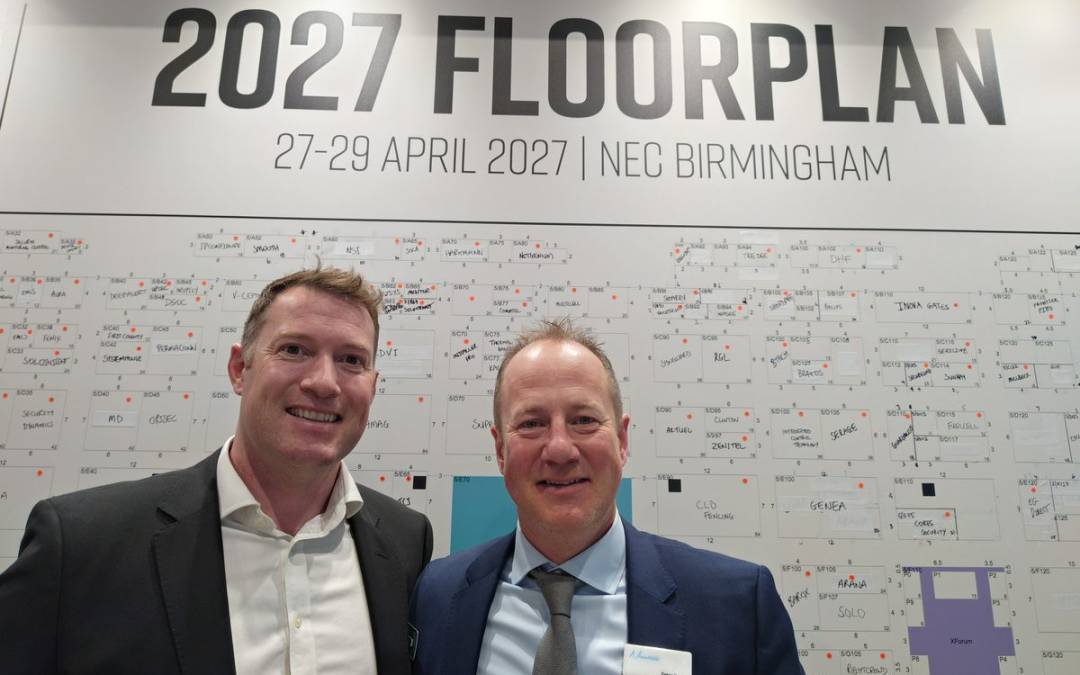
The Security Event 2027 returns to the NEC Birmingham on Tuesday 27 to Thursday 29 April and the Lollies are looking forward to exhibiting for the fifth year in a row and our second on stand 5/A90. As usual, the event will bring together manufacturers, distributors, monitoring stations, software developers and equipment specialists from right across the industry. Everyone hoping to catch the eye of the installers and end users who will be walking the floor to see what is new, meet suppliers and work out who they can trust. And it’s not just security! The Fire Safety Event runs next door at the same time, so the fire safety crowd come down the ramp to have a look too. Which makes it one of the most important rooms in the sector to be visible in. Our message for The Security Event 2027 is simple.